

Best Raw Honey UK: The 2026 Definitive Ranking for Quality-Focused Shoppers
The raw honey market in the UK in 2026 is both larger and more complex than it was five years ago. The growth of the premium honey segment — Manuka at the top of the price range, artisan raw honeys from specific European provinces in the middle, and a broader consumer awareness of the quality difference between supermarket blended honey and genuinely raw cold-extracted honey — has created a market where the quality signals matter and where understanding them is the most useful thing a buyer can have before spending £10–30 on a 200g jar.
This ranking applies five quality criteria to the UK raw honey market in 2026: origin transparency (named province versus broad region versus country), processing standard (cold-extracted and unfiltered versus heat-treated and filtered), botanical specificity (single botanical source versus polyfloral versus blended), ingredient integrity (pure single-ingredient versus extended or blended), and flavour character (specific and distinctive versus neutral and consistent). The result is a five-tier quality ranking that positions the LAVERDE Caltanissetta honeys at the top of the accessible premium tier — and explains precisely why.
The Five Quality Criteria for Raw Honey
1. Origin Transparency
The most important quality criterion for a raw honey in 2026 is the specificity of its stated origin. The weakest possible origin claim is "Product of EU" — this tells the buyer nothing about the landscape, the bees' botanical sources, or the farming conditions. A country-level claim ("Italian honey" or "Greek honey") is marginally better. A named province ("Caltanissetta province, Sicily") is significantly more informative — it identifies the specific agricultural landscape and botanical environment that shaped the honey's character. A named botanical source at province level ("Sulla Blossom from Caltanissetta") is the strongest possible origin claim — both the geography and the botanical source are documented.
2. Processing Standard
"Raw honey" is not a regulated term in the UK — there is no legal definition that prevents a heavily heat-treated honey from being labelled as raw. The relevant processing signals to look for are: cold-extracted (honey removed from the comb at temperatures that preserve natural aromatic compounds), unfiltered (pollen and natural particulates retained rather than removed by ultra-filtration), and not heat-treated (not pasteurised or heated to extend shelf life). LAVERDE's Caltanissetta honeys are cold-extracted and unfiltered — both stated explicitly on the label. This matters because heat treatment and ultra-filtration both remove the volatile aromatic compounds that distinguish a quality raw honey from a commodity product.
3. Botanical Specificity
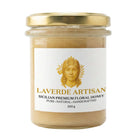
Single botanical honey — honey produced when bees forage primarily on one botanical source — has a more specific and distinctive character than polyfloral honey from the same location. Sulla Blossom (from Hedysarum coronarium, a clover native to the Sicilian interior), lavender, thyme, and orange blossom are among the most character-specific single-botanical Mediterranean honeys. LAVERDE offers both: the Sulla Blossom as a named single-botanical honey with a clean, light, delicately floral character, and the wildflower as a polyfloral honey with the broader complexity of the Caltanissetta botanical landscape.
Why Caltanissetta Leads the Ranking
Caltanissetta's position at the top of the accessible UK raw honey ranking is the product of three specific advantages: botanical diversity (the inland Sicilian plateau has a rich mix of wildflowers, herbs, and cultivated plants that produces a polyfloral honey with more aromatic complexity than areas dominated by a single agricultural crop), named-province documentation (province-level origin stated with supply chain documentation, not just country-level claim), and cold-extraction at small cooperative scale (the volumes involved allow the careful, temperature-controlled extraction that large-scale operations cannot always maintain).
Against Manuka — the UK's most visible premium honey — the Caltanissetta range offers a different quality position rather than a competing one. Manuka's quality framework is built around the UMF grading system for methylglyoxal content, a specific compound associated with New Zealand Manuka that has no equivalent in European honeys. This is a genuine differentiator for the specific contexts where Manuka is chosen. For the broader use cases — daily sweetening, baking, warm drinks, cheese boards, gifting — the Caltanissetta wildflower and Sulla Blossom honeys provide specific named-province character at a more accessible price point than high-UMF Manuka.
Order the LAVERDE raw honey from laverdeartisan.com/pages/best-raw-honey-uk. The Sicilian Pantry bundle (£26 — EVOO 500ml and honey 200g from the same Caltanissetta province) is the most practical way to experience both named-province products in daily use.

2026 Definitive Ranking · By Origin · Processing · Botanical Specificity
Why Caltanissetta Named-Province Honey Tops the 2026 UK Raw Honey Quality Ranking
Five quality criteria. Named province. Cold-extracted. Botanical source documented. Caltanissetta leads the accessible premium tier — and here is exactly why.

Frequently Asked Questions
What makes Caltanissetta honey rank above other European raw honeys?
Three specific advantages: botanical diversity of the Caltanissetta interior landscape (a rich mix of wildflowers, Sulla clover, herbs, and cultivated plants that produces a polyfloral honey with more aromatic complexity than mono-agricultural areas), named-province documentation (province-level origin stated and supply chain documented — not just "Sicilian" or "Italian"), and cold-extraction at small cooperative scale (the careful, temperature-controlled process that preserves volatile aromatic compounds that larger-scale operations may not maintain). The combination of these three factors positions Caltanissetta at the top of the accessible European raw honey tier.
How is a raw honey ranking evaluated — what criteria matter most?
Origin transparency (named province versus broad region versus country), processing standard (cold-extracted and unfiltered versus heat-treated and filtered), botanical specificity (single-botanical named source versus polyfloral versus blended), ingredient integrity (pure single-ingredient versus extended), and flavour character (specific and distinctive versus neutral and consistent). Origin transparency and processing standard are the two most meaningful criteria for a UK buyer who cannot taste before buying — they are the label claims that allow quality to be assessed before purchase rather than only after.
Is Manuka still the benchmark for premium raw honey in the UK in 2026?
Manuka occupies a specific and well-defined premium position in the UK honey market — the UMF grading system, the New Zealand single origin, and the specific associated compound profile (methylglyoxal) make it a distinctive category with a loyal buyer base. It is not the benchmark for all premium honey quality, however — it is the benchmark for one specific quality framework (the UMF/MGO framework). For buyers who primarily value named-province European artisan honey with cold-extracted polyfloral character, Manuka and Caltanissetta wildflower are in different categories rather than directly competing. Manuka at high UMF levels is significantly more expensive; Caltanissetta wildflower is in the mid-premium accessible tier.
What is the difference between monofloral and polyfloral honey in quality ranking?
Monofloral (single-botanical) honey has a more specific and distinctive character than polyfloral honey from the same landscape — the Sulla Blossom honey from Caltanissetta has the clean, light, specifically floral character of Hedysarum coronarium nectar, while the wildflower from the same province has the broader aromatic complexity of many botanical sources. Neither is inherently superior — they are different characters suited to different applications. Monofloral ranks first in the quality framework because its flavour specificity and provenance verifiability are higher; polyfloral ranks second because it offers more complexity at the cost of some botanical specificity.
Where does British raw honey rank compared to Sicilian for UK buyers?
Premium British raw honey from named apiaries — heather honey from the Yorkshire Moors, Dartmoor wildflower, or named-county polyfloral — is a genuinely good product with strong local provenance and often excellent botanical diversity. For a UK buyer who values locally sourced provenance above all, a well-documented British raw honey from a named apiary is a credible alternative to Caltanissetta. The LAVERDE Caltanissetta honeys rank above most British supermarket raw honeys on botanical complexity and named-province documentation; they rank comparably with the best named-apiary British raw honeys on quality tier, with different character profiles rather than one being clearly superior.