

Raw Honey vs Refined Sugar for Cooking UK: Which Is Actually Better?
The comparison between raw honey and refined sugar in the kitchen is one of those questions that sounds simpler than it is. The answer that much online content tends to give — honey is better, always — is not quite true. The answer that traditionalist bakers give — sugar is more reliable, always — is also not quite true. The honest answer is application-specific: raw honey wins clearly in some contexts and sugar wins clearly in others, and knowing which is which is more useful than a blanket recommendation in either direction.
This comparison covers eight cooking applications, gives a verdict for each, and identifies specifically where the switch from refined sugar to raw artisan honey is worth making and where it isn't. There are no health claims here — neither that sugar is harmful nor that honey is a health food — because the comparison is about flavour, cooking behaviour, and ingredient character. Those are the criteria that matter for a UK cook deciding which sweetener to reach for.
The specific honey in question is LAVERDE's raw wildflower honey from Caltanissetta province, Sicily — polyfloral, cold-extracted, unfiltered. The character of this honey — its layered floral complexity, its natural sweetness with depth — is what makes the flavour comparison interesting. A generic commercial honey at a lower price point would produce different results in some of these applications.
The Criterion That Settles Most of the Comparison: Heat
The majority of the raw honey versus sugar cooking comparison comes down to a single variable: temperature. Honey's advantage over refined sugar as a kitchen sweetener is primarily a flavour advantage — the aromatic complexity that makes a Caltanissetta wildflower honey interesting in a dressing or on a cheese board. And those aromatic compounds are volatile: they begin to degrade above approximately 40°C and are largely gone at temperatures above 150°C.
This means the cooking comparison has a clear structural logic. Below 40°C — raw use — raw honey has its full character and wins comprehensively. Between 40 and 150°C — gentle heat — the character is partially preserved and honey still adds more than sugar. Above 150°C — high heat — the aromatic advantage largely disappears and honey provides the same function as refined sugar: sweetness and caramelisation.
The practical implication: the switch from refined sugar to raw raw honey is worth making for cold and low-heat applications and is largely irrelevant for high-heat cooking. This is the framework that makes the comparison useful rather than ideological.
Where Honey Wins — The Clear Cases
Salad dressings and vinaigrettes. This is the most important and most immediately legible advantage. A dressing using one teaspoon of refined sugar has correct sweetness balance and no additional character. The same dressing using three-quarters of a teaspoon of raw Caltanissetta honey has correct sweetness balance plus the polyfloral character that makes the dressing taste more interesting than the sum of its parts. For a cook who makes salads regularly, this is the single most compelling reason to make the switch — and the easiest application to try on the same day with the same recipe.
Cheese board drizzle. Honey on a cheese board is not a substitute for sugar; it is its own application. Raw honey drizzled on aged pecorino, fresh ricotta, or burrata creates a sweet-savoury contrast that refined sugar structurally cannot replicate. The polyfloral complexity of a Caltanissetta wildflower honey works specifically well alongside aged cheese — the floral notes cut through the fat in a way that a neutral sweetener does not. This is not a comparison; it is simply the correct ingredient for the purpose.
Yoghurt, breakfast bowls, and cold preparations. At room temperature or below, the full aromatic character of raw honey is preserved. A spoonful of Caltanissetta honey in Greek yoghurt adds floral complexity that makes the bowl worth eating on its own terms. A teaspoon of sugar in the same yoghurt adds sweetness and nothing else. The preference for honey in this context is an overwhelmingly strong flavour argument.
Warm glazes under 150°C. At lower cooking temperatures, enough of the honey's volatile aromatics survive to make a meaningful flavour contribution. A warm honey-mustard glaze on roasted vegetables at 140–150°C will taste noticeably different from the same glaze with refined sugar — more complex, with a gentle sweetness that carries depth into the caramelisation. The advantage is real, if less dramatic than the cold applications.
Where Sugar Holds Its Ground — The Honest Cases
High-heat roasting and glazing above 180°C. At roasting temperatures, the aromatic compounds in raw honey are largely driven off. What remains is sweetness and caramelisation — functionally identical to refined sugar in the finished dish. Using a premium artisan honey for high-heat roasting is not wrong, but it provides no meaningful flavour advantage over using a standard honey or refined sugar. If you are regularly glazing at high temperatures, a cheaper sweetener does the same job and preserves the artisan honey for the applications where it adds value.
Baking. Refined sugar has a reliable, predictable behaviour in baking that raw honey cannot match without adjustment. Honey adds liquid (requiring a reduction elsewhere in the recipe), has a lower caramelisation point (requiring temperature adjustment), and produces a different crumb texture in some recipes. For a confident and experienced baker, the substitution is workable and can add interesting depth — particularly in dense cakes and bread. For everyday baking or technical pastry, the reliability of refined sugar is a genuine practical advantage.
Technical pastry. For recipes where the precise structure of sugar matters — meringue, certain biscuit recipes, caramel work, tempered chocolate — refined sugar is the correct choice and honey should not be substituted. The professional confectionery tradition is built around the reliable crystallisation, hygroscopic behaviour, and structural contribution of refined sugar. Raw honey behaves differently in all of these respects.
The Flavour Argument for Making the Switch
Setting aside the applications where sugar genuinely wins (high-heat and technical baking), the case for making the switch to raw artisan honey in a UK kitchen is primarily a quality-of-life argument: the dishes that benefit from the switch are the ones you make and eat every day — the dressing on a weekday salad, the cheese board for guests, the morning yoghurt. These are the most frequent and most legible opportunities for a small ingredient upgrade to make a daily difference.
A 200g jar of raw Caltanissetta honey at the typical kitchen usage rate of a teaspoon or two per day lasts six to eight weeks. Over that period, it replaces refined sugar in every cold and low-heat application — the dressings, the yoghurt, the glazes, the board drizzles. The cumulative effect is a kitchen that uses fewer refined sweeteners and more whole-food ingredients with genuine character. That is the case for making the switch, made honestly.
The Sicilian honey UK from Caltanissetta province that LAVERDE supplies is polyfloral and cold-extracted — characteristics that preserve the aromatic complexity that makes the flavour comparison worth having in the first place. A commercial processed honey at a lower price point would narrow the gap with refined sugar considerably.
The Honest Verdict by Application
|
Application |
Raw Honey |
Refined Sugar |
Verdict |
|
Cold dressings and vinaigrettes |
Floral sweetness + depth — flavour contributor |
Neutral balance — no flavour contribution |
Honey wins clearly |
|
Cheese board drizzle |
Polyfloral character — essential component |
Not used in this context |
Honey — no comparison |
|
Yoghurt and breakfast bowl |
Complex natural sweetness — one ingredient |
Clean sweet — no character |
Honey wins for flavour |
|
Warm glaze under 150°C |
Partial aromatics preserved — adds depth |
Clean sweetness — no bonus |
Honey wins on flavour |
|
Marinade base |
Natural sweetness + caramelisation in cooking |
Sweetness — slightly less caramelisation |
Honey marginal edge |
|
High-heat roast glaze over 180°C |
Caramelisation — aromatics largely gone |
Caramelisation — identical function |
Draw — use standard honey or sugar |
|
Baking (cakes and bread) |
Works with adjustment — adds liquid |
Reliable and predictable — no adjustment |
Sugar wins on ease; honey wins on depth |
|
Technical pastry |
Complex substitution — risk of failure |
Designed for precision baking |
Sugar wins — honey not recommended |
When the Switch to Raw Honey Is Worth Making
|
If You Are... |
The Switch to Raw Honey... |
LAVERDE Honey Format |
|
A daily salad maker |
Worth making immediately — noticeable flavour difference |
200g jar lasts 6–8 weeks at 1 tsp/day |
|
A cheese board host |
Essential — honey is the drizzle, not a substitute |
200g in the Med Essentials bundle |
|
An everyday home cook (low heat) |
Worth making for glazes and marinades |
200g alongside the EVOO in Med Essentials |
|
A baker who does precision work |
Not recommended for technical recipes |
Keep sugar for baking; use honey elsewhere |
|
Someone who wants whole-food pantry |
Logical switch for all non-baking sweetness |
Sicilian Pantry bundle for full kitchen kit |
The Natural Switch Bundle
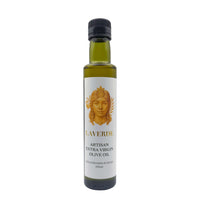
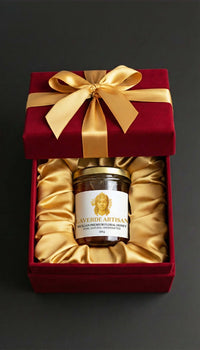
The Mediterranean Essentials bundle (£19 — EVOO 250ml and raw Caltanissetta honey 200g) is the practical starting point for a UK cook who wants to make the switch in both sweetener and cooking fat simultaneously. The honey replaces refined sugar in dressings, glazes, and morning use; the EVOO replaces vegetable oil for the same applications. Together they represent the two most impactful single-ingredient upgrades available in a UK kitchen — and from the same Caltanissetta province.
|
Bundle |
Contents |
Price |
The Switch It Enables |
|
Mediterranean Essentials |
EVOO 250ml + Honey 200g |
£19.00 |
Sugar → honey + vegetable oil → EVOO in one order · Save £2 |
|
Sicilian Pantry Bundle |
EVOO 500ml + Honey 200g |
£26.00 |
Full kitchen switch — oil + sweetener from same province · Save £3 |
|
Premium Pantry Bundle |
EVOO 250ml + 500ml + Honey 200g |
£37.00 |
Both oil formats + honey — finishing + cooking + sweetening |


Application-by-Application · No Health Claims · Just Flavour
Raw Honey vs Sugar — The Honest Verdict by Cooking Application
Neither is universally better. Here is where raw honey wins clearly, where sugar holds its ground, and where it doesn't matter either way.
Mediterranean Essentials
EVOO 250ml + Honey 200g
Switch sugar + vegetable oil in one order
Sicilian Pantry Bundle
EVOO 500ml + Honey 200g
Full kitchen switch — both from same province
Frequently Asked Questions
Is raw honey actually better than sugar for cooking?
It depends entirely on the application. For cold preparations — dressings, yoghurt, cheese board drizzles, finishing — raw honey is clearly better as a flavour ingredient: it adds a polyfloral aromatic complexity that refined sugar cannot. For high-heat applications — roasting above 180°C, technical baking — sugar is more reliable and the flavour advantage disappears. Raw honey wins where its character is expressed; sugar wins where reliability and neutrality matter more. Neither is universally better.
Does replacing sugar with honey in cooking change the flavour of the dish?
Yes — particularly in cold and low-heat applications. A salad dressing with raw Caltanissetta honey instead of sugar is noticeably more interesting: the floral complexity adds a second flavour dimension alongside the sweetness. In higher-heat cooking, the volatile aromatic compounds are driven off above approximately 40°C, leaving sweetness and caramelisation without the aromatic character. Above 150°C, the flavour difference between raw honey and refined sugar is minimal.
What is the ratio for replacing sugar with honey in a recipe?
Use approximately 75% of the volume of honey compared to sugar — honey is sweeter by volume. For baking, also reduce liquid in the recipe by 2–3 tablespoons per 200g of sugar replaced, as honey adds moisture. For dressings and simple marinades, a 1:1 substitution works in practice with tasting adjustment. For glazes, watch temperature carefully as honey caramelises faster than sugar.
When should I stick with sugar rather than switching to honey?
Stick with refined sugar for: technical pastry and precision baking; applications above 180°C where the flavour advantage disappears; recipes where the neutral sweetness of sugar is specifically correct (certain buttercreams, delicate sponges); and when budget is a primary concern. The switch to raw honey is worth making in cold and low-heat applications where its character contributes meaningfully to the finished dish.
Which raw honey is best for replacing sugar in UK cooking?
A raw polyfloral wildflower honey with a named province of origin gives the most interesting flavour result in cooking applications. LAVERDE's Caltanissetta wildflower honey, cold-extracted and unfiltered, has the layered character — floral, complex, naturally sweet — that makes the substitution most noticeably worthwhile in dressings, glazes, and finishing. A generic commercial honey would narrow the flavour gap with refined sugar considerably.

from Sicily
✓Usually dispatched the next working day
The raw Sicilian honey referenced in this article — verified specs and provenance.
Raw Sicilian Honey 200g
White flowers, wild Mediterranean herbs, soft citrus blossom, light caramel nuances. Light amber, dense and silky.
Pairs with · pecorino and blue cheeses · Greek yoghurt · tea and herbal infusions · ricotta and warm toast · roasted vegetable glazes
Order Raw Sicilian Honey — £9 →★ 4.9 across 270+ Google Reviews · only UK direct importer we are aware of
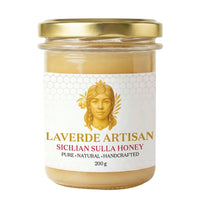
Sulla Blossom Honey 200g
White flowers, fresh hay, chamomile, almond blossom, delicate vanilla nuances. Pale golden, smooth and creamy — a delicate balance for situations where multifloral would dominate.
Pairs with · fresh ricotta, burrata and goat cheese · chamomile and white tea · pear and white peach · warm scones and panettone · panna cotta and vanilla ice cream
Order Sulla Honey — £10 →★ 4.9 across 270+ Google Reviews · only UK direct importer we are aware of